Guide · Kansas City
Garage Door Spring Replacement: The Complete Guide
Torsion or extension, standard or high-cycle — here's how garage door springs work, how to spot a break, and why this is the one repair to leave to a pro.
A&E · Kansas City
Your garage door springs are the hardest-working, most dangerous parts of the whole system, and almost nobody thinks about them until one snaps. This guide explains how garage door springs actually work, the difference between torsion and extension springs, why cycle ratings matter, how to spot a broken spring, and why spring replacement is one job we strongly recommend leaving to a trained technician. A&E Emergency Garage Door Repair handles spring repair across the KC metro, 24/7, on every brand.
How garage door springs counterbalance the door
Here is the part most people miss: your garage door opener does not lift your door. A standard double door can weigh 150 to 250 pounds, and the small motor mounted to your ceiling could never haul that much weight up and down thousands of times. The real lifting is done by your garage door springs, which store mechanical energy and counterbalance the weight of the door so it feels nearly weightless.
When the door is closed, the springs are wound tight and loaded with tension. As the door rises, that stored energy is released to offset the door's weight; as the door lowers, the weight of the door re-loads the springs. The opener is really just the thing that gives the balanced system a nudge and tells it which direction to go. This is why a door with a broken spring feels like it suddenly weighs a quarter-ton, and why your opener strains, hums, or simply gives up when a spring fails.
A properly balanced door is the foundation of everything else. When the springs are correctly sized and tensioned, the door holds steady at any height, the opener runs without strain, the cables stay seated, and the whole system lasts longer. When the springs are worn, mismatched, or broken, every other component starts working harder and wearing out faster. That is why garage door spring repair is one of the most common and most important service calls we run.
Torsion springs vs. extension springs
Two systems that do the same job in very different ways
Torsion springs
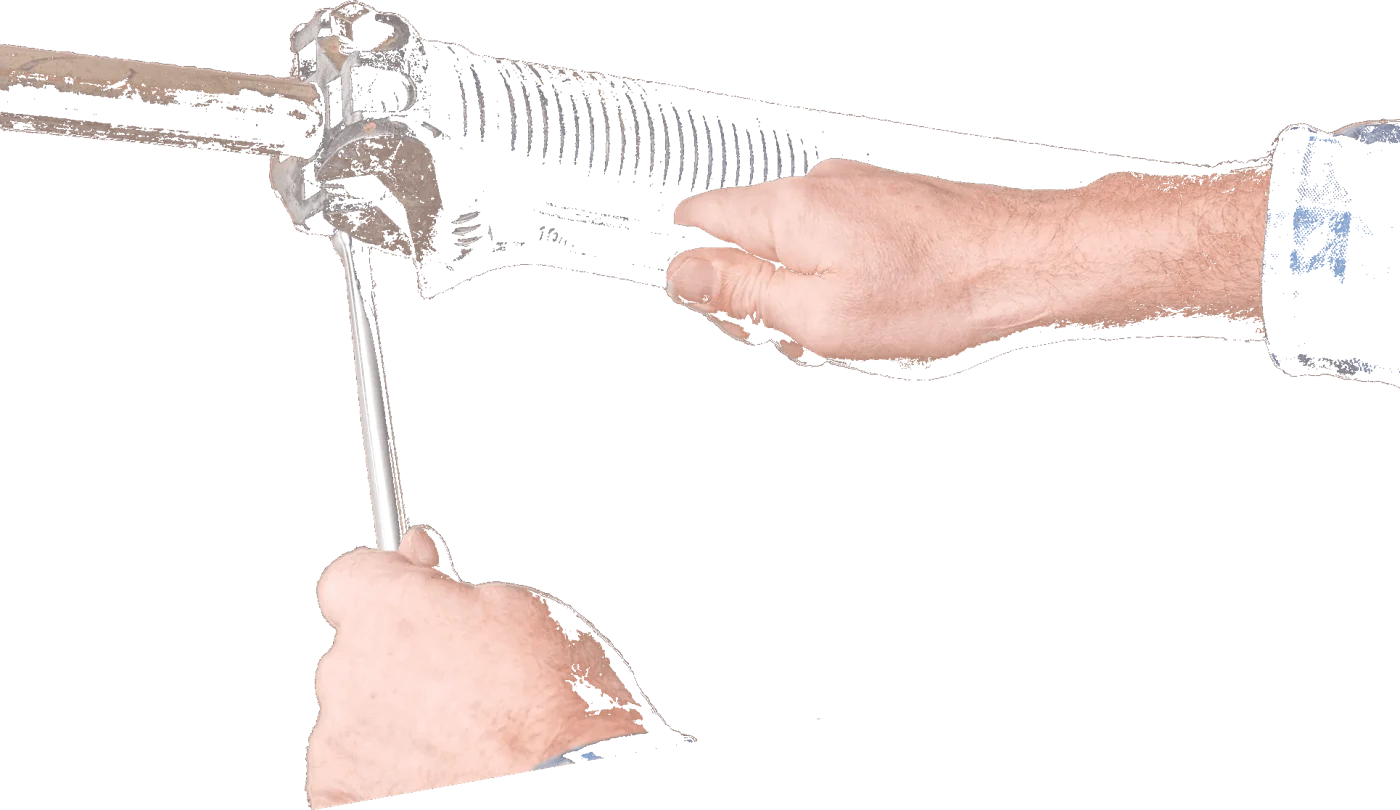
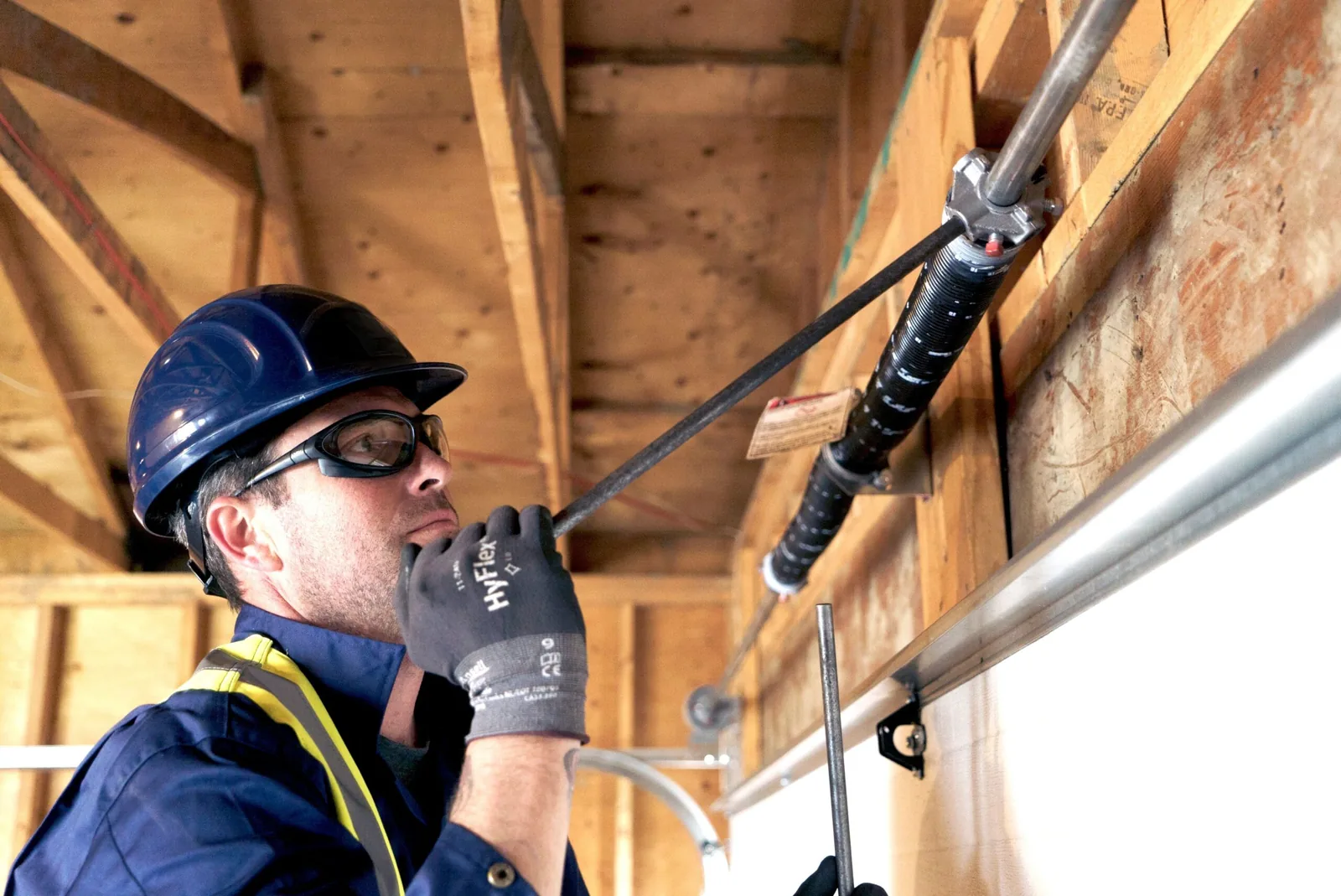
Mounted on a metal shaft above the door opening, torsion springs store energy by twisting (torque) as the door moves. They are the modern standard, run smoother and quieter, last longer, and give better control. Torsion spring replacement requires winding the spring to a precise tension with winding bars, which is exactly why it is dangerous to do by hand.
Extension springs
Mounted along the horizontal tracks on each side of the door, extension springs stretch and contract to counterbalance the weight. They are common on older and lighter doors. Because they store energy by stretching, a failed extension spring can launch across a garage, which is why they should always have safety cables run through them.
Which one you have
Look above the door: a spring (or two) on a shaft across the top means torsion. Springs running parallel to the tracks on the sides mean extension. Not sure? Don't experiment. Tell us what you see over the phone and we'll bring the right parts and the right tools for your exact setup.
Sizing matters
Springs are matched to the door's exact weight, height, and drum size. A spring that is even slightly off makes the door hard to lift, hard on the opener, or unsafe to leave open. We measure and match every time rather than guessing, so your door ends up correctly balanced, not just moving.
Cycle ratings: standard vs. high cycle springs
Garage door springs are rated in cycles, and one cycle is a single open and close. A typical builder-grade spring is rated for roughly 10,000 cycles. That sounds like a lot until you do the math: a busy household opening the door six to eight times a day can burn through 10,000 cycles in just a few years. Once a spring reaches the end of its rated life, the metal fatigues and it is living on borrowed time.
High cycle springs are built thicker and longer to deliver far more cycles from the same setup, commonly in the 20,000, 30,000, or even higher range. They cost a little more up front in materials, but for a door that gets heavy daily use, an attached garage you use as your main entry, or a homeowner who simply never wants to think about springs again, high-cycle is often the smarter long-term choice. On a spring call we can talk through whether a standard or high-cycle spring fits how you actually use your door.
Cycle life is also why age matters more than appearance. A spring can look perfectly fine right up until the day it snaps, because the failure is happening inside the metal as it fatigues. If your door is more than a handful of years old and the springs have never been touched, they may already be near the end of their rated life even if nothing looks wrong yet.
Signs of a broken spring
A broken spring usually announces itself. If you notice any of these, stop using the door and call a technician before something gets damaged or someone gets hurt:
- A loud bang from the garage, like a firecracker or a gunshot — that's almost always a spring snapping
- A visible gap or separation in the torsion spring above the door (a broken spring looks like two pieces with a gap between the coils)
- The door will not open, or the opener strains, hums, and stops partway
- The door slams down fast or feels incredibly heavy when you try to lift it by hand
- The door opens crooked, with one side lagging behind the other
- Loose, frayed, or dangling cables, which often follow a spring failure
- The door rises a few inches and then stops, because the opener's safety reverse senses the extra weight
Why springs are replaced in pairs
If your door has two springs and one breaks, we strongly recommend replacing both. Here's why: both springs were installed at the same time and have gone through the same number of cycles, so if one has reached the end of its life, the other is right behind it. Replacing only the broken one almost guarantees a second service call within months, and a mismatched pair (one new, one worn) throws the door out of balance and puts uneven strain on the opener and cables. Replacing the pair now saves you a repeat trip, a second labor charge, and the hassle of another failure later.
Why DIY spring work is genuinely dangerous
We're all for homeowners who like to fix their own stuff, but garage door spring replacement is the one repair we ask you not to DIY, and we say that out of genuine concern, not to drum up business. A wound torsion spring holds an enormous amount of stored energy. If a winding bar slips, the spring releases that energy in a fraction of a second, and the bar or the spring itself can break fingers, hands, teeth, and worse. Extension springs under tension can fire across a garage with enough force to seriously injure someone.
The danger is compounded by the fact that the job looks simple in online videos. What those videos can't convey is how the tension feels in your hands, how easily a cheap winding bar bends, how much depends on winding to the exact right number of turns, and how a door that is even slightly off-balance becomes a heavy, unpredictable hazard hanging over your car and your family. Add in cables under load, a heavy door, and a tight workspace, and the margin for error is small.
A trained technician brings the correct winding bars, properly sized replacement springs, and the experience to read the door's balance and tension by feel. We do this every day, we know exactly where the energy is stored and how to release it safely, and we carry insurance precisely so that you don't have to take on that risk yourself. If you've searched garage door spring repair near me after hearing that bang, that instinct to call a professional is the right one.
What A&E does on a spring call
Inspect and weigh the system
We start by safely confirming the spring is the real problem, identifying whether you have torsion or extension springs, and checking the door's weight and balance so we install the correctly sized spring rather than a generic one.
Check the whole counterbalance system
A spring rarely fails in isolation. We inspect the cables, drums, bearings, shaft, and rollers for wear or damage caused by the failure, and flag anything that's compromised before it turns into the next breakdown.
Replace the spring (or pair) safely
Using proper winding bars and controlled tension, we install the new spring or matched pair. We'll talk through standard versus high-cycle springs so you can choose based on how hard your door actually works.
Balance, tune, and test
We wind the spring to the precise tension for your door, then test the balance by hand and with the opener. A correctly balanced door holds at any height, runs quietly, and takes the strain off your opener. We don't leave until it's right.
Call us anytime, on any brand
A&E Emergency Garage Door Repair handles torsion and extension spring replacement across the KC metro, on both the Kansas and Missouri sides, day or night. We're based in the Fairfax industrial district of Kansas City, KS, fully licensed and insured, and we service every brand. Call (913) 404-5111 — a snapped spring is exactly the kind of emergency we exist for, 24/7.
Good to know
Frequently asked questions
How long do garage door springs last?
Should both springs be replaced together?
Can I replace a garage door spring myself?
Related services & guides
Spring Repair
A loud bang and a door that won't lift usually means a broken spring. We replace torsion and extension springs safely.
Learn moreCommon Problems
A symptom-by-symptom guide to what's wrong with your garage door — and when to call a professional.
Learn moreRepair Cost Guide
What affects the cost of a garage door repair, and how A&E's upfront, no-surprise quotes work.
Learn more