Guide · Kansas City
Garage Door Opener Buying Guide: Drive Types & Features
Chain, belt, screw, or wall-mount? Smart, battery backup, the right horsepower? Here's how to choose the opener that fits your door and your garage.
A&E · Kansas City
Picking a new garage door opener comes down to two choices: the drive type that moves your door and the features that fit how you live. This guide breaks down chain, belt, screw, and jackshaft drives, plus smart Wi-Fi, battery backup, and security upgrades, so you can choose with confidence. A&E installs and services every type across the KC metro.
Choosing the Right Garage Door Opener Starts With the Drive Type
Your garage door opener is the hardest-working motor in your home. It cycles thousands of times a year, it lives in an unconditioned space that swings from freezing to sweltering, and it's attached to the single largest moving object in the house. So when it's time to replace one, the smart move is to understand garage door opener types before you shop, not after.
The good news is that the decision isn't complicated once you know what separates the options. Nearly every modern opener comes down to two questions: what drive type moves the door, and which features matter for how you actually live. At A&E Emergency Garage Door Repair, we install and service all of them across the KC metro, and we're a non-exclusive shop, so the recommendation you get from us is built around your door and your garage, not a brand we're locked into selling.
This guide walks you through the four main drive systems, the features worth paying attention to, and how to size an opener so it isn't fighting your door for the next decade.
Garage Door Opener Types: The Four Drive Systems
Each drive type moves your door a little differently. Here's how to think about the trade-offs.
Chain Drive
A metal chain pulls the door open along the rail. Chain drives are the workhorses: durable, affordable, and proven over decades. The trade-off is noise. The chain produces a recognizable rattle and hum, which most people don't mind in a detached garage but notice fast when there's a bedroom overhead. If reliability per dollar is your priority, this is the classic choice.
Belt Drive
A reinforced rubber belt replaces the chain, and the difference is night and day for noise. Belt drives are the go-to quiet garage door opener option, which makes them ideal when the garage shares a wall or ceiling with living space. They run smoothly with fewer vibrations and tend to need less fuss over time. In the belt drive vs chain drive debate, belt wins on quiet, chain wins on raw upfront value.
Screw Drive
A threaded steel rod turns to slide the trolley along the rail, with fewer moving parts than a chain. Screw drives land in the middle: quieter than a chain, often faster opening, and mechanically simple. They can be sensitive to temperature swings, so we'll talk through whether one suits your specific garage and climate.
Jackshaft / Wall-Mount
A jackshaft opener mounts on the wall beside the door and turns the torsion bar directly, with no overhead rail or motor unit. That clears your entire ceiling for storage, lighting, or a tall vehicle, and these units are typically very quiet. They're the premium, space-saving pick and a strong fit for high-lift doors and tidy garages.
Best Garage Door Opener Features: Smart Wi-Fi, Battery Backup, and Security
Drive type sets the foundation, but features decide how the opener fits your daily life. The most requested upgrade today is a smart garage door opener with built-in Wi-Fi. These let you open, close, and check the door's status from your phone, get an alert if it's been left open, and grant access to a delivery driver or family member without handing out a remote. Many also tie into voice assistants and home-automation routines.
A battery backup opener is more than a convenience, and in some areas it's now an expectation. When the power goes out, a backup battery lets you still raise and lower the door normally instead of wrestling with a manual release in the dark, which matters a lot if your garage is the only way in or out. We'll point out which units include it and which take it as an add-on.
Security has quietly become one of the biggest reasons to retire an older opener. Modern units use rolling code technology, where the access code changes every single time you press the remote, so it can't be intercepted and replayed by a thief. If your current opener is more than a couple of decades old, it may use a fixed code, and upgrading is one of the most meaningful safety improvements you can make. Add-ons like brighter LED lighting, extra remotes, exterior keypads, and the photo-eye safety sensors required on every modern system round out the list.
Sizing the Opener: HP and Door Weight
An undersized motor strains, overheats, and wears out early; an oversized one is wasted money. Match the opener to the door using these factors.
- Door material and weight. A lightweight single-car aluminum door asks far less of a motor than a heavy two-car wood or insulated steel door.
- Door size. Wider and taller doors weigh more and need more pulling power, full stop.
- Motor strength (HP or equivalent DC rating). Lighter doors are happy with a smaller motor; heavy, oversized, or high-cycle doors want a stronger unit so it isn't running at its limit on every cycle.
- Insulation and glass. Insulated panels and decorative glass inserts add real weight that's easy to overlook when you're estimating.
- How often you use it. A door that opens a dozen-plus times a day benefits from a stronger, more robust motor that won't be stressed by the volume.
- Balance and spring health. Even a perfectly sized opener struggles if the door's springs are worn. A properly balanced door is what lets the right-sized motor last.
How to Choose Your Opener in Five Steps
Listen to where your garage lives
If there's a bedroom, office, or living room next to or above the garage, lean toward a quiet belt drive or a wall-mount jackshaft. A detached or standalone garage gives a budget-friendly chain drive room to shine.
Look up at your ceiling
Need that overhead space for a lift, a roof rack, tall storage, or a high-lift door track? A jackshaft mounts on the wall and frees the whole ceiling. Plenty of clearance and a standard door? A rail-mounted opener is perfectly fine.
Decide which features are non-negotiable
Want phone control and open-door alerts? Choose a Wi-Fi smart opener. Is your garage the main entrance? Prioritize battery backup so an outage never traps you. Replacing an old unit? Insist on rolling-code security.
Match the motor to the door
Use the sizing factors above, or let us weigh and assess your door. A heavier or oversized door wants a stronger motor; a light single door doesn't need to pay for one.
Have it installed and tuned right
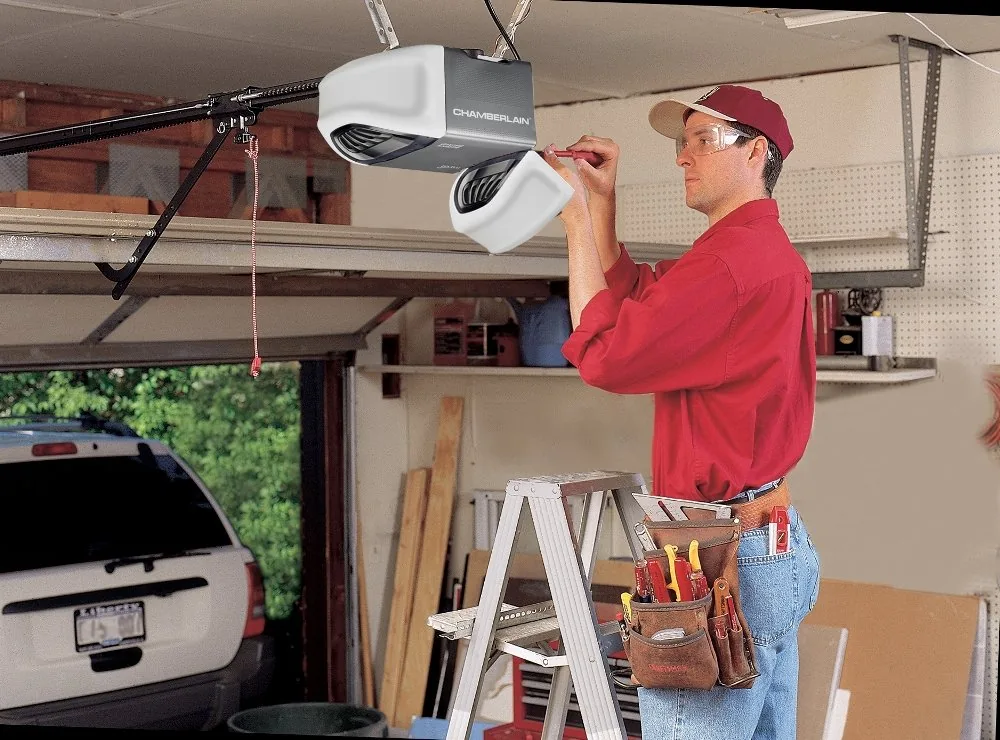
The best opener still fails early on a poorly balanced door or with misaligned safety sensors. Professional installation sets the travel limits, force settings, and photo-eyes correctly so the system is safe and lasts.
We Install and Service Every Type, KC Metro Wide
Whether you've landed on a whisper-quiet belt drive, a ceiling-clearing jackshaft, a dependable chain drive, or a smart opener with battery backup, A&E Emergency Garage Door Repair installs and services them all. We're licensed and insured, based in the Fairfax industrial district of Kansas City, KS, and we serve homeowners across the KC metro in both Kansas and Missouri, on every major brand. As a non-exclusive shop, our only goal is matching you to the opener that fits your door, your garage, and how you live. Available 24/7 — call (913) 404-5111 to talk it through or schedule installation.
Good to know
Frequently asked questions
What's the quietest garage door opener?
Do I need a battery backup opener?
Which opener brands do you install?
Related services & guides
Opener Brands We Service
We service and program all major opener brands — LiftMaster, Chamberlain, Genie, Craftsman, Linear and more.
Learn moreOpeners & Remotes
Opener not responding, remote not working, or sensors out of line? We fix, install, and program all brands.
Learn moreCommon Problems
A symptom-by-symptom guide to what's wrong with your garage door — and when to call a professional.
Learn more